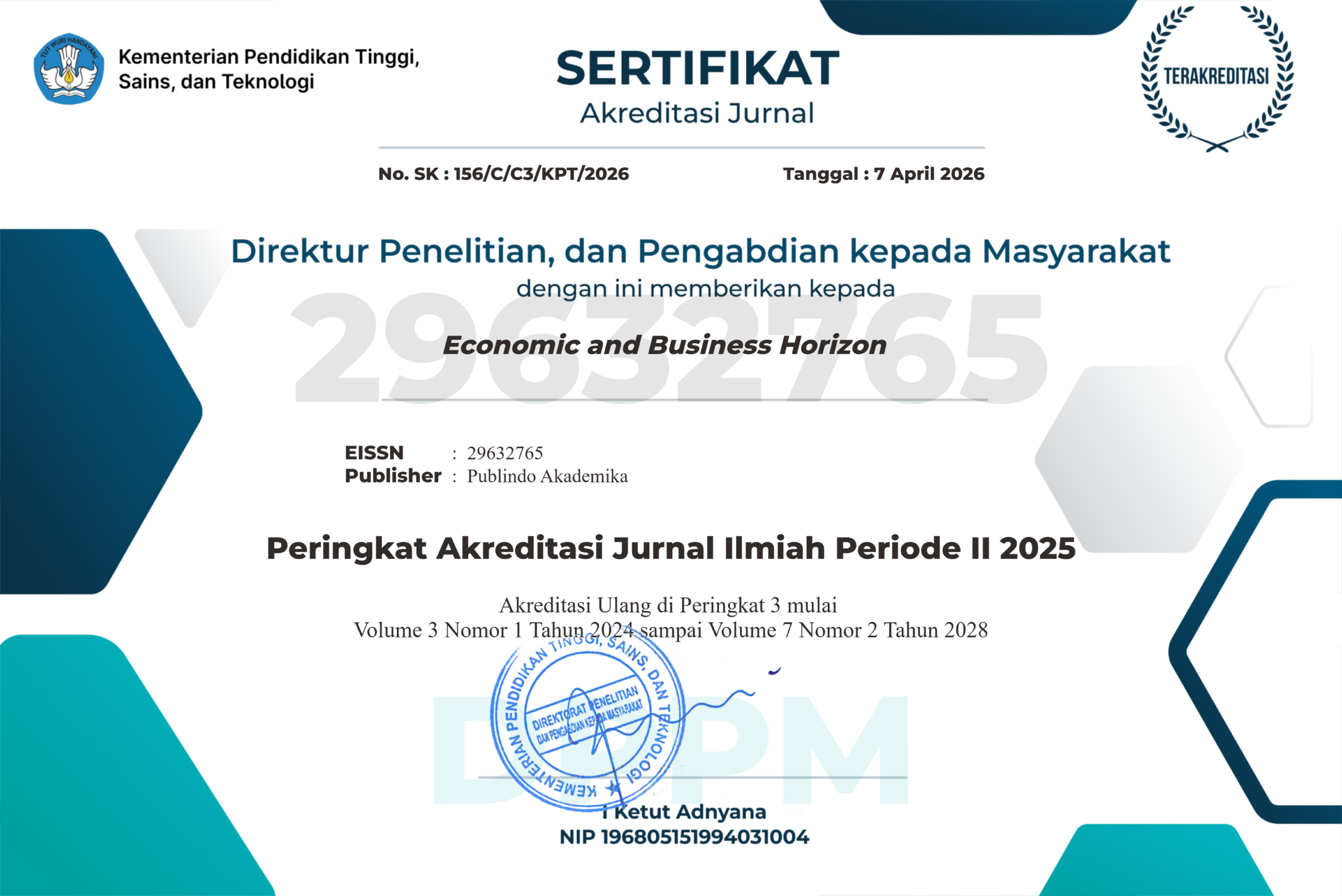
The Impact of Organizational Citizenship Behavior on Organizational Effectiveness
DOI:
https://doi.org/10.54518/ebh.3.3.2024.512Keywords:
Workload, Organizational Effectiveness, OCB, Human ResourcesAbstract
This study aims to analyze the role of Organizational Citizenship Behavior (OCB) in supporting organizational effectiveness and how workload affects this behavior in the work environment. OCB is voluntary behavior that is not included in the employee's formal duties but contributes to the performance of the organization. Meanwhile, workload refers to the number of tasks and work pressures that employees have to face in a given period. This study uses a quantitative approach with a survey method to collect data from employees in various organizations. The results show that OCB contributes positively to organizational effectiveness, while too high a workload can inhibit the emergence of this behavior. Therefore, organizations need to manage workloads proportionately to continue to support OCB behavior and improve employee well-being and productivity.
References
Ali, H., Sastrodiharjo, I., Saputra, F., Besar, G., Ekonomi, F., Bhayangkara, U., & Raya, J. (2022). Pengukuran organizational citizenship behavior: Beban kerja, budaya kerja dan motivasi (Studi literature review). Jurnal Ilmu Multidisiplin, 1(1), 83-93.
Dhania, D. R. (2012). Pengaruh stres kerja, beban kerja, terhadap kepuasan kerja (studi pada medical representatif di kota kudus). Jurnal Psikologi: PITUTUR, 1(1), 15-23.
Hermawan, E. (2022). Analisis Pengaruh Beban Kerja, Konflik Pekerjaan-Keluarga Dan Stres Kerja Terhadap Kinerja Pt. Sakti Mobile Jakarta. Jurnal Ilmu Manajemen Terapan, 3(4), 372-380.
Husadha, C., Zen, A., & Panjaitan, E. (2014). Pengaruh Penjualan Bersih, Beban Pokok Penjualan, dan Beban Usaha Lainnya Atas Output Laba Bersih PT Indofood Sukses Makmur Tbk. Jurnal Ilmiah Akuntansi Dan Manajemen, 10(2), 8-21.
Kusumajati, D. A. (2014). Organizational citizenship behavior (OCB) karyawan pada perusahaan. Humaniora, 5(1), 62-70.
Leuhery, F. (2024). Analisis Pengaruh Beban Kerja Dan Budaya Kerja Terhadap Organizational Citizenship Behavior: Literature Review Manajemen Sumber Daya Manusia. Jurnal Darma Agung, 30(1), 1190-1198.
Rajab, M. (2021). Individual Behavior Measurement Model: Individual Characteristics, Work Culture and Workload (Literature Review MSDM). Dinasti International Journal of Management Science, 2(4), 703-712.
Takeuchi, R., Bolino, M. C., & Lin, C. C. (2015). Too many motives? The interactive effects of multiple motives on organizational citizenship behavior. Journal of Applied Psychology, 100(4), 1239.
Vipraprastha, T., & Putra, B. N. K. (2023). Kinerja karyawan yang didasarkan pada beban kerja, kompensasi, dan organizational citizenship behavior pada pt. Indah permai depo denpasar. Journal of Applied Management Studies, 4(2), 125-135.
Zaki, H., & Marzolina, M. (2016). Pengaruh Beban Kerja dan Kompensasi terhadap Turnover Intention melalui Kepuasan Kerja pada Karyawan PT. Adira Quantum Multifinance Cabang Pekanbaru. Jurnal Tepak Manajemen Bisnis, 8(3).

Downloads
Published
How to Cite
Issue
Section
License

This work is licensed under a Creative Commons Attribution-ShareAlike 4.0 International License.